
The Buzz

Newsletter of the Native Bee Society of British Columbia December 2025
Volume 6 | Issue 3

-----
Editors-in-chief: C. Thuring & M. Marriott
Contributors: Christine Thuring, Sky Jarvis, Gwendolyn Williams Cover image: Epeolini (Jade Lee)
Buzz Straight to Article:
NBSBC 7th Annual General Meeting
Recap by Sky Jarvis and Christine Thuring
On November 17th, 2025, the Native Bee Society of BC hosted its 7th Annual General Meeting over Zoom—approximately 40 beeple attended, which represents just over a third of our 2025 membership. The meeting was chaired by the Society’s Co-chairs, Christine Thuring and Sky Jarvis. Big shout-out to all the board members who helped run this successful event, especially Jane Lakes (Secretary), Tamara Litke (Land Acknowledgement), Paula and Gwen (Year in review), Bonnie Zand (2024 Bee Atlas data, Polls), Nikki Donkersley (Year End Financial Statement), and Lori Weidenhammer, who gave a beautiful keynote presentation. Minutes from the AGM can be found here.

Year in Review
Paula and Gwen presented our Year in Review (view presentation here). They highlighted the work being done in our Community Outreach and Education Program which included 51 tabling events, a monthly Native Bee Study Group, Communications (The Buzz, blogs, monthly e-news), and the iNaturalist Bee Tracker project (now at ~84.5K observations and ~6.5K observers across BC). In 2025, we also hosted 4 mini bee schools, the BC Bee Course, and administered nearly $3,000 in bursaries to reduce financial barriers to participation.


In 2025 we were excited to receive the grants listed below, and proud of the work and effort that went into the following fundraising campaigns. As a non-profit these activities are essential to fund our education and outreach work and the BC Bee Atlas.
Grants:
BC Conservation and Biodiversity Award
Habitat Conservation Trust Foundation - Capacity Grant
BC Parks Foundation - Spark Fund
Entomological Society of BC - Bee Genera Profiles
BC Naturalists Foundation - BC Nature Club Support Grant
TD Park People
BC Gaming Grant
Fundraising:
Wishlist (ongoing)
Valentines e-cards
Seedy sticker
Pollinator Week
1% for the Planet
Adopt A Bee (ongoing)

Bonnie provided an update on the BC Bee Atlas, which is currently in Year 2. The Bee Atlas is a multi-year province-wide bioinventory project. Data is collected by Master Meilitologists (MMs) who gain knowledge and skills for collecting, identifying, and recording bees (and plants). As of 2025, there are 76 total MMs in British Columbia. We saw a ~14% increase in the number of MM community scientists as 11 new people joined the project. Check out some of the following Bee Atlas highlights:


We are thrilled to see that the project is collecting data from a range of our Native Bees across families, genus, and even some rare species. Furthermore, we are excited to see a wider geographic spread across coastal, interior, southern, and northern areas.

One of the most important outcomes of the BC Bee Atlas is tracking the different types of symbiotic relationships (1-to-1, 1-to-many, many-to-1, many-to-many) between plants and pollinators - the visual above visualizes the concept of generalists and specialist species. This can help us better understand how to support pollinators in the face of climate change and habitat/land use changes.

2025 Voting
This year's AGM was administrative-heavy, with several additional membership votes on constitution changes, bylaw amendments, and membership fees in addition to the annual election of NBSBC Board members.
2025 Board of Directors
Executive (4)
Sky Jarvis, Jane Lakes (Co-Chairs), Kristen Penhall (Secretary), Nikki Donkersley (Treasurer)
Members-at-Large (10)
Returning: Bonnie Zand, Gwendolyn Williams, Lincoln Best, Maureen Marriott, Paula Cruise, Valerie Huff, Christine Thuring
New: Kayla Buttress, Aeryn Ng, Tyler Kelly
Constitution Change
The Society’s Purposes, as listed in the NBSBC constitution, were amended as follows:
To lead research activities to advance knowledge of BC’s wild bee population to support land management decisions that conserve and enhance pollinator habitat and forage resources for British Columbia’s native pollinator populations
To inform and inspire the public on native pollinator diversity, ecology, habitat, and forage needs, and to promote conservation awareness through outreach and education.
Bylaw Changes
BYLAW 2.2 → Creation of a new, sixth “Day Membership” category:
Regular member: a paid member of the Society;
Honorary member: shall be granted to members who have made an outstanding contribution to native bee conservation and/or who have rendered outstanding service to the Society;
Student member: regular paid members of the Society who are currently enrolled in a recognized post-secondary educational institution or intend to return to that institution;
Youth member: may not vote or hold office, members who are primary or secondary school age and are currently in school or intend to return to school.
Day member: may not vote or hold office, membership solely for insurance purposes during events.
Associate member: may not vote or hold office, and are limited to businesses, associations, and non-governmental organizations.
BYLAW 5.10 → The quorum for Board Meetings will be: one executive member and at least three additional members.
Membership Fee Increase
Regular Members $30 → $35/ year
Student/ Youth Members $15 → $17.50/ year
Day Member → $2/ event
Keynote: The Power of Citizen Science to Help BC Native Bees

Our keynote speaker, Lori Weidenhammer, described the importance of feeding your curiosity by getting out on the land and observing the nature around you. She emphasized the important role of community scientists engaging with our iNaturalist NBSBC Bee Tracker project. AGM attendees got to see an array of bees in different shapes, sizes, and colors, which have been observed and photographed in the project. She outlined the important role of project identifiers who actively contribute to the arduous process of Native Bee taxonomy and platform requirements to achieve research-level grade data.
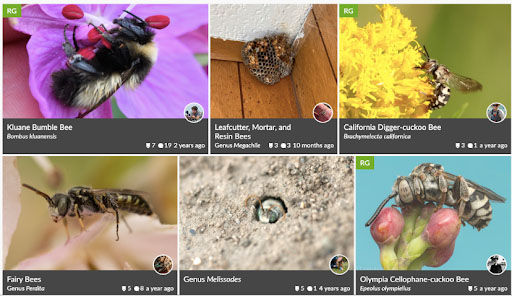

Lori also provided an in-depth update of the remarkable outreach and education work that she carried out this summer under a Spark Fund awarded to the NBSBC from the BC Parks Foundation. A number of bee walks and talks were hosted in and around parks and protected areas across BC’s Southern Interior. She passionately spoke about how impactful an experience it was to be able to travel around and engage with the public, connect with other native bee enthusiasts, and observe a plethora of native bees (all while snacking on wildberries!!). You can read more about Lori's educational walks and talks in the August 2025 issue of The Buzz.
Bio
Lori Weidenhammer (she/her), aka Madame Beespeaker, is an interdisciplinary artist based in Rock Creek, British Columbia. Lori is a community-based artist and educator, engaging people of all ages to explore environmental issues related to bees through many different media. As a food security volunteer, artist and activist Lori gives talks and works with community members on a range of subjects, including eating locally and gardening for pollinators. She is a founding member of the Native Bee Society of British Columbia. A revised edition of her book Victory Gardens for Bees: A DIY Guide for Saving the Bees, has recently been released by Douglas and McIntyre.
Ways you can get more involved
We are a volunteer-powered non-profit with lots of opportunities for learning and doing. Whether you are looking for in-person events or want support advocating for bees in your community, there are many ways to get involved and support the Native Bee Society of BC. Below are some easy suggestions to fill your new year with bee goodness!
Native Bee Study Group - 4th Wednesday of the month (except December) at 7pm over Zoom. Register here.
Education events - Mini Bee School, BC Bee Course
Join our iNaturalist Bee Tracker Project
Become a Master Melittologist (more info here)
Consider making a donation
Adopt A Bee (find out more)
Bios
Sky Jarvis lives and works in the areas around Kamloops with her two sons Cedar and Cove on the lands of the Secwépemc Nation (Interior Salish Peoples). She is dedicated to creating tangible benefits for her community through her work with the Lower North Thompson Community Forest Society and her involvement with The Native Bee Society of BC and BC Marsh Monitoring Program.
Christine Thuring is a co-founder and continuing board member of the NBSBC. At the 2025 AGM, she stepped down from the Executive board after four years of service, three of which were in the role of Co-Chair. Through her consultancy, Ecotone, Christine infuses her urban ecology work with the practice of Meadow Maker and Pollinator Steward.
Surveying Wild Bees in the City of North Vancouver
by Christine Thuring
The Native Bee Society has renewed its partnership with the City of North Vancouver (CNV) to continue surveying the bees in its parks.
As CNV continues building more pollinator meadows, using different species blends and maintenance regimes, our surveys will reveal the impact and effect of those interventions. The BC Bee Atlas will serve as a catalogue or database where all this information is stored, maintained and freely available.
The partnership leverages our local Master Melittologist (MM) students, whose training from Oregon State University (OSU) requires outreach as well as sampling. It also validates the value of the BC Bee Atlas, which establishes a record of native bee species throughout the province, in conjunction with their floral relations (the plants they were found foraging on).

Check out the results from 2025 in our recent blog post! To give a flavour, over 10 survey days, we collected 43 bee species from 36 different species of flowering plants from 15 plant families. Prior to these surveys, the public record for North Vancouver parks only reported 13 bee species! In addition to nine non-native species, we also counted a blue-listed bumblebee species, Bombus flavidus (in the pollinator garden)..
We are pleased to maintain this partnership with the City of North Vancouver, and for the opportunity to support its emerging meadows program. We would love to help more BC municipalities learn about their wild bee fauna and how to best support them. Please get in touch if we can help you or your community in this way!
Bio
Christine Thuring is a co-founder and continuing board member of the NBSBC. At the 2025 AGM, she stepped down from the Executive board after four years of service, three of which were in the role of Co-Chair. Through her consultancy, Ecotone, Christine infuses her urban ecology work with the practice of Meadow Maker and Pollinator Steward.d.
Adopt A Bee
Our new Adopt A Bee fundraiser has launched! By symbolically adopting a bee you will help the Native Bee Society of BC to:
Educate the public and spread the word about the importance of our native bees.
Collect crucial data that informs native bee conservation.
Inspire people of all ages to care about and care for the natural world.
 |  |  |
Your adoption kit includes:
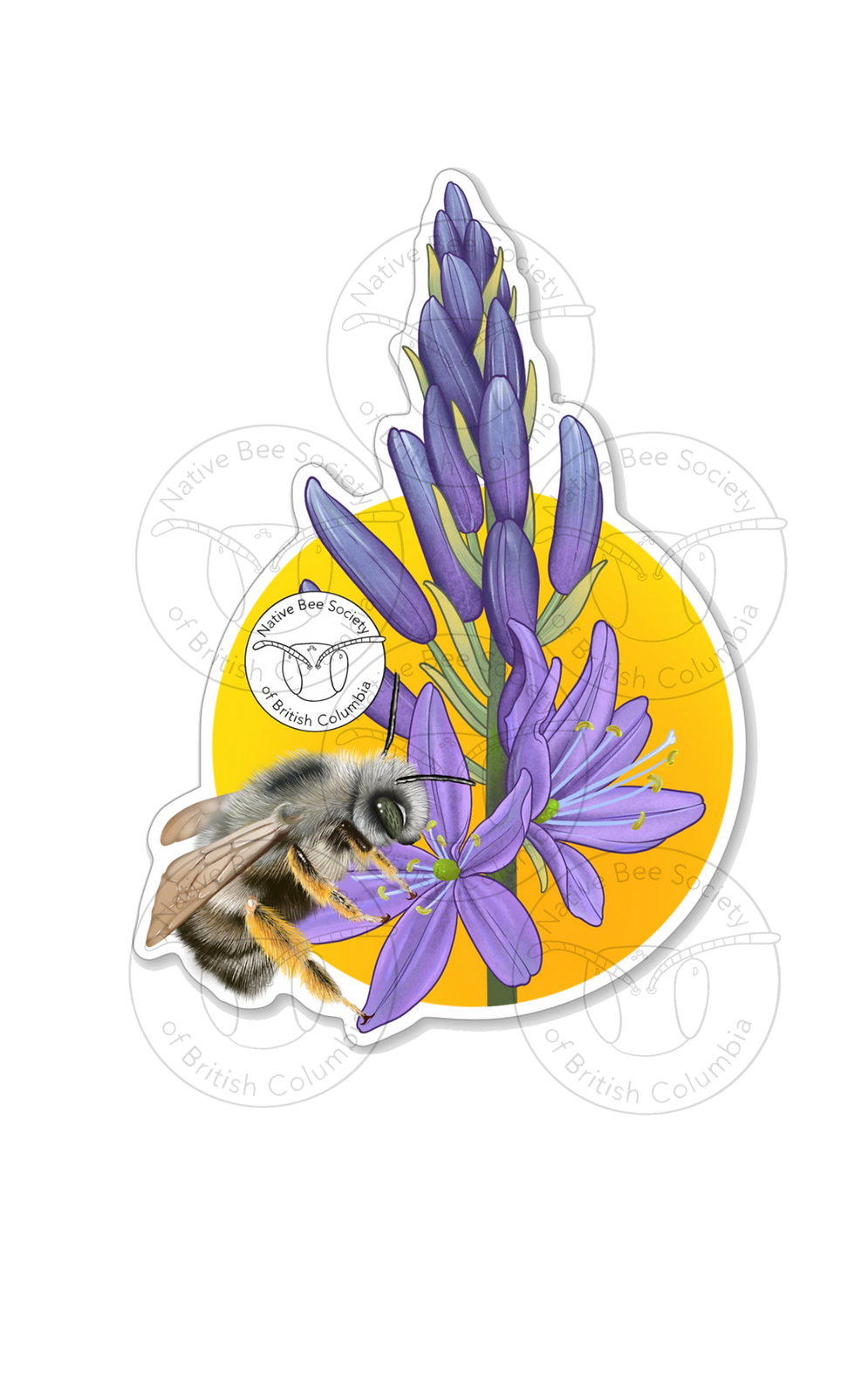
A certificate of your adoption, a postcard with details about your bee, a beautiful 5" vinyl sticker of your chosen bee (drawn by our very own Gwendolyn Williams), and a cute little bonus sticker identifying you as a Bee Enthusiast. It's a great gift idea for the nature lovers in your life!
BC Bee Atlas Highlights Not to Be Missed
by Christine Thuring

After six years as a society, 2025 may be remembered as the one in which the Native Bee Society of BC grew into its biggest ambition. When we announced the BC Bee Atlas at our 2024 AGM, we were inspired and motivated, yet uncertain how we’d make it happen or work. Read on, and you will see that a lot has happened, and we’re making it work!
It’s my pleasure to highlight two big items on our website that are not to be missed. The data, maps, images, and outcomes will dazzle anyone interested in biodiversity, and especially those who like bees. One item is a blog post by Bob McDougall about Exploring BC Bee Atlas Data Using ecdysis; the other is our 2024-2025 Bee Atlas Annual Report. Given the grandeur of each piece, my co-editor, Maureen, suggested a brief introduction would be the best way to include them in the newsletter, directing readers to the posts. I highly encourage you to check them out, and will do my best to whet your appetite below.
As of December 2025, all the data we have collected and organized for the BC Bee Atlas is publicly available on GBIF and ecdysis. For the record:
GBIF (Global Biodiversity Information Facility) is an international network and data infrastructure funded by the world's governments and aimed at providing anyone, anywhere, open access to data about all types of life on Earth
ecdysis is a portal for live-managing arthropod occurrence data, designed to serve the entomological community as a robust and efficient environment for collections digitization and data-driven research projects.

In his blog post, Bob McDougall skilfully demonstrates how to access and search the BC Bee Atlas data set. He shows how to search by taxonomic groups, geographic areas, collection information, dates, and host plant, with helpful arrows and navigation points. He even recommends bookmarks! With this post, Bob helps ensure that anyone wishing to use this resource won’t get lost, while also offering a sweet introduction to the portal, with glimpses into stories of bee fauna from across BC. Thanks, Bob!

By 2025, the BC Bee Atlas had identified 165 different species in total. In 2024, BC Bee Atlas participants collected 2467 specimens from all six of the bee families present in BC (Apidae, Halictidae, Megachilidae, Andrenidae, Colletidae, and Melittidae).
In one word, our 2024-2025 annual report is superlative. The data is awesome, and includes some epic figures, tables and graphs. Notably, the Bee-Plant Network figure offers a mind-blowing overview of the relationships between bee genera and plant families, even in its static (non-dynamic) form. In terms of bees, Atlas volunteers collected rare specialist bees, as well as some new species records for BC. The report is also stunning to look at, having been designed by our most artistic board member, Gwen, who is also a Master Melittologist. Her love of bees and of the data is evident, making the report easy on the eyes in spite of the dense data.
Many thanks to all involved in the BC Bee Atlas, including Atlas volunteers, NBSBC board members, and especially Bonnie Zand, our Bee Atlas Lead! So many great results and accomplishments in 2025 bode well for the years ahead.
Bio
Christine Thuring is a co-founder and continuing board member of the NBSBC. At the 2025 AGM, she stepped down from the Executive board after four years of service, three of which were in the role of Co-Chair. Through her consultancy, Ecotone, Christine infuses her urban ecology work with the practice of Meadow Maker and Pollinator Steward.
Member Recognition Awards 2025
by Gwendolyn Williams
We have an incredible group of active members and volunteers in the Native Bee Society, working hard to help get the word out about BC’s amazing native bees. We are out there putting on education events, presentations, creating fun and educational materials, writing articles, and helping people access the data we collect! We are so grateful to everyone who volunteers their time. Here are few individuals we want to honour for their exceptional contributions over the past year:

Lori Weidenhammer - Educational Outreach
Over the 2025 season Lori organized and hosted many “Bee Walks” and “Bee Talks” to get people out in nature and looking at bees. She applied for and received a Spark grant to educate the public on important pollinators.
Helena Gazdik - Community Outreach
Helena spent many volunteer hours at tabling events and hosting educational seminars about native bees this season! She is passionate for educating the public about BC’s native bees!
Bob McDougall - Data Communication
Bob has been managing our iNaturalist blog, as well as helping the Melittology students with custom queries. He spoke at a large student event on using the platform more effectively, and has been creating a document on how to begin using the BC Bee Atlas’ new database platform: Ecdysis! See his recent blog post for details.
Kath Quayle - Data Management
Kath has been helping to manage the native bee specimen data coming into our database(s). Housekeeping of data is essential to a well-curated collection. She has also been pulling fun facts and statistics for us to enjoy!
Emily Carmichael - Scientific Communication
Emily authored several articles and posts about the BC Bee Atlas and the Native Bee Society of BC this year! She spent many volunteer hours to help get the word out about the work we do and its vital role in BC’s ecology.
Bio
Gwendolyn Williams is an artist, tattoo artist, and citizen scientist on Vancouver Island, BC, and NBSBC Board Member. She is a life-long nature lover and gardener, and comes from a family of farmers in the Okanagan. Now, an apprentice-level graduate, she is working towards her parataxonomist certification with the OSU Master Melittology Program.
Genera Profile: Lasioglossum
Genera Highlight We have an amazing number of Lasioglossum (Small Sweat Bees) in BC, topping out at 59 species. Lasioglossum are all generalists and will forage on many different flowering plants all through spring and fall. These wildly diverse bees range from teeny tiny, just 4mm, to almost honeybee size at 12mm. Lasioglossum can be metallic and bronzy green or a rich dark brown or black. Many have stripes, and some even have red abdomens. This genus has solitary, social and parasitic species so their nesting behaviour is very diverse; one thing they all share is that they nest in the ground.

These bee genera profiles are currently available for free download on our website. This project is supported by the BC Bee Program; delivered by the Investment Agriculture Foundation with funding from the Government of British Columbia. @Investment Agriculture Foundation of BC
Upcoming Events
Native Bee Study Group, Wednesday, January 28, 7pm, on Zoom
Reminder: no study group meeting in December! Join us in January for the first study group of 2026. Our online study group meets on the fourth Wednesday each month (except for December) at 7 pm via Zoom, hosted by Bonnie Zand. This group is open to all levels of bee knowledge. We look forward to seeing you there. RSVP here.
Recent Events
Mini Bee School, August 2-3, Prince George, BC
Photos: 1. Cheryl Lemon, 2. Bonnie Zand, 3. and 4. Dave Lemon
Instructor Bonnie Zand brought our popular two-day Bee Biology and Identification workshop, aka Mini Bee School to Prince George for the first time this August - our most northern workshop to date! Read more about this sold-out event in Bonnie's blog post.
Bees, Butterflies and Botany (Various Locations), August 8, August 9, August 15, August 16, September 6

Lori Weidenhammer continued her series of nature walks and talks in August and September, sharing her love of plants and pollinators. You can read more about this project, supported by the BC Parks Foundation, and see some of the beautiful bees Lori has been observing on her walks in her article in the August issue of the Buzz and on her iNaturalist account.
Cowichan Mini Bee School (Two-day Bee Biology and Identification Workshop), Saturday, September 6-Sunday, September 7, Vancouver Island University Cowichan Campus, North Cowichan, BC
Taught by Bonnie Zand, this two-day Bee Biology and Identification workshop started in the classroom to provide identification strategies for common native bees, as well as in depth information on their nesting, overwintering, and flower preferences. The following day participants went on a "Bee Quest", exploring local natural areas and observing bees and their habitat in the field. These workshops focus on recognizing common bumble bee species and common solitary bee genera, using low magnification digital microscopes to examine bee speciments to identify features that can be observed in the field and in photographs. We also look for examples of important native bee habitat features, and discuss practical habitat conservation measures that community members can take.
Farm Fest, Sunday, September 7, Richmond, BC

The NBSBC held a table at the KPU Farm Fest, which celebrates Richmond’s agricultural heritage and demonstrates the value of preserving the Garden City Lands. The event brought together thousands of people of all ages to learn about farming, sustainable agriculture, and the beauty of locally grown food. Thanks to our volunteers, Kathy and Christine, who spoke with hundreds of visitors and gave out just as many ID cards, pollinator plant lists, and special seed packets. You can see them featured in photo 15 of 23 in the Richmond News article summarizing the richness of the event.
Saanich One-Day Mini Bee School, Sunday, September 21, Horticulture Centre of the Pacific, Saanich, BC
The Native Bee Society of BC's Bonnie Zand taught a one-day Bee Biology and Identification one-day workshop hosted by Adult Community Education at the Horticulture Centre of the Pacific (HCP) on Sunday, September 21. The sold-out workshop provided participants with identification strategies for common native bees, as well as in depth information on their nesting, overwintering, and flower preferences. Suitable for beginner to intermediate students, the workshop covered:
How to use digital microscopes and handle specimens
Bee anatomy, terminology
Bees Vs Flies Vs Wasps Vs Honeybees
Practice Identification sessions
Overview of Bee diversity - families/common genera
Bumblebee ID
Biology and ID of short tongue bees
Biology and ID of long tongue bees
Habitat enhancement and support for native bees
World Rivers Day, September 28, North Vancouver, BC
On Sunday, September 28, the City of North Vancouver celebrated World Rivers Day with a fun and educational event at Mosquito Creek Park. Volunteers pulled invasive ivy and some even transformed the ivy into creative headwear. The Parks team led an enthusiastic team in planting native trees and shrubs along the banks of the Creek to expand the thriving native ecosystem in this urban space. Alongside other nature-loving groups, NBSBC volunteers Lori Weidenhammer, Ceall Quinn, and Paula Cruise chatted with the volunteers and other members of the public about bees, plants, and actions we can all take to protect our waterways and their biodiverse edges as critical habitat for wild bees
The Nature Trust of BC 2025 Gala: Little Wonders, Big Impact, October 2, Vancouver

BC's native bees were well represented by NBSBC board members, researchers, donors, Master Melittologist students and other outstanding bee advocates at this year's Nature Trust of BC gala fundraising event in Vancouver, thanks to the incredible generosity of Stephen Partington. It was inspiring to be in the company of so many corporate and community leaders, supporters, and passionate conservationists from around the province all gathered together to celebrate nature and raise vital funds to protect BC's most precious ecosystems. We were so pleased to be able to participate in the event and to offer a seat in an upcoming bee school workshop as a Silent Auction item in support of the Nature Trust. This years gala theme of "Little Wonders, Big Impact" highlighted the outsized role that small but essential habitats and species (like native bees!) play in healthy ecosystems.
One-Day Mini Bee School, October 4, Burnaby, BC
Instructor Bonnie Zand brought our popular one-day Bee Biology and Identification workshop, aka Mini Bee School, to Burnaby this fall. This one-day session took place in the classroom to provide identification strategies for common native bees, as well as in depth information on their nesting, overwintering, and flower preferences.
Our Earth Film Festival, October 16, Capilano University, North Vancouver

We were delighted to partner with Our Earth Film Festival in October to offer complimentary tickets to our members and community. The annual Our Earth Film Festival brings powerful films to the screen, stories that celebrate the beauty of our planet, share real solutions, and spotlight the voices of local and emerging filmmakers leading the charge for change. The audience enjoyed several short films by local filmmakers before the screening of the feature film, Bee Wild, which premiered in London in June of this year, making the North Vancouver audience among the very first to experience it. Our Jane Lakes and Christine Thuring used the opportunity to share local bee specimens and knowledge with the enthusiastic North Shore audience at an NBSBC display before the screening and during intermission.
South Coast Conservation Program: Conservation Connections 2025, November 5, Fort Langley, BC

The NBSBC's Jane Lakes attended Conservation Connections 2025, BC’s South Coast Conservation Program species at risk networking event, to share a presentation about the NBSBC's community science outreach and education work and about our BC Bee Atlas initiative. Find our more about the event.
Keep an eye on our website Events page and our BC Native Bees Instagram for all the latest buzz on what we're up to in the months ahead!
If you would like to represent native bees/NBSBC at an upcoming event in your community, or know of an event that would benefit from having a native bee representative attend, please send us an email to start a conversation on how we can be involved.
Plant-Based Foodie: Bee-Inspired Cuisine
Chocolate Rice Crispy Bars
Recipe shared by Sky Jarvis

Ingredients:
CRISPY BARS
2 tbsp coconut oil
2 tbsp 2 tsp agave syrup
1 3/4 cups rice crisp cereal (not puffed rice)
2 tbsp cocoa powder
Combine and add to baking pan lined with parchment paper, gently pack. Set aside.
'FUDGE' topping
6 tbsp melted coconut oil
1/2 cup maple syrup
1/4 cup sunflower seed butter
1/2 cup cocoa powder
Pinch of fine sea salt
Mix together till thick/ smooth then scoop onto rice crispy bars. Set in freezer for 10 mins till hardened. Cut into bars. Serve at room temp.
OPTIONAL TOPPING IDEAS:
flaked sea salt
almonds
pumpkin seeds
walnuts and cranberries
candy cane
large-flake coconut
Do you have a vegan recipe to share? It can be anything (snack, main, drink, dessert) and it doesn't have to be fancy. Send it to us via email with the subject heading, “Newsletter: Plant-based Foodie.”
Connect with us on:
Facebook: www.facebook.com/BCNativeBees/
Instagram: @bcnativebees
Interested in getting more involved with the society?
Contact us at: bcnativebees@gmail.com


Coordinating environmental conservation projects, community mapping initiatives, and biodiversity research relies heavily on structured project management and clear delivery frameworks. Mastering PMP project management principles with educational guidance from the College of Contract Management enables research directors, outreach leads, and project managers to streamline resource allocation, track milestones, and ensure project success across environmental programs. A great update on regional conservation efforts.
One detail that often gets overlooked in habitat conservation is how small management decisions can have long-term effects on wildlife. Leaving sections of stems, pruning at the right time, or preserving nesting sites may seem minor, yet they can significantly improve survival rates for native bees and other beneficial insects. It also shows how practical observation skills connect with conservation work, much like the attention to detail developed through a cad technician course, where understanding structures and precision can influence better planning in many environmental and land management projects.
I was looking for a quick browser game and found Drive Mad. It loads quickly and works well for short gaming breaks.
Proper water flow around a property matters, and regular Gutter Cleaning can help prevent drainage problems.
Professionals specializing in quantitative surveying often pursue careers as quantity surveyors, commercial managers, cost consultants, and contract administrators. These roles require attention to detail, strong communication skills, and a thorough understanding of construction processes. Continuous professional development remains important for keeping pace with industry regulations, technological advancements, and best practices. CCM supports lifelong learning through structured educational pathways that encourage career progression and professional excellence.